The agreements signed during the Libya Energy & Economic Summit 2026 mark one of the clearest signals in years that Libya’s upstream agenda is moving from ambition to bankable plans.
Anchored by a long-term Waha expansion framework involving two global supermajors, the message is clear that Libya is widening the pipeline pairing a flagship investment deal with parallel tracks to unlock future exploration and development.
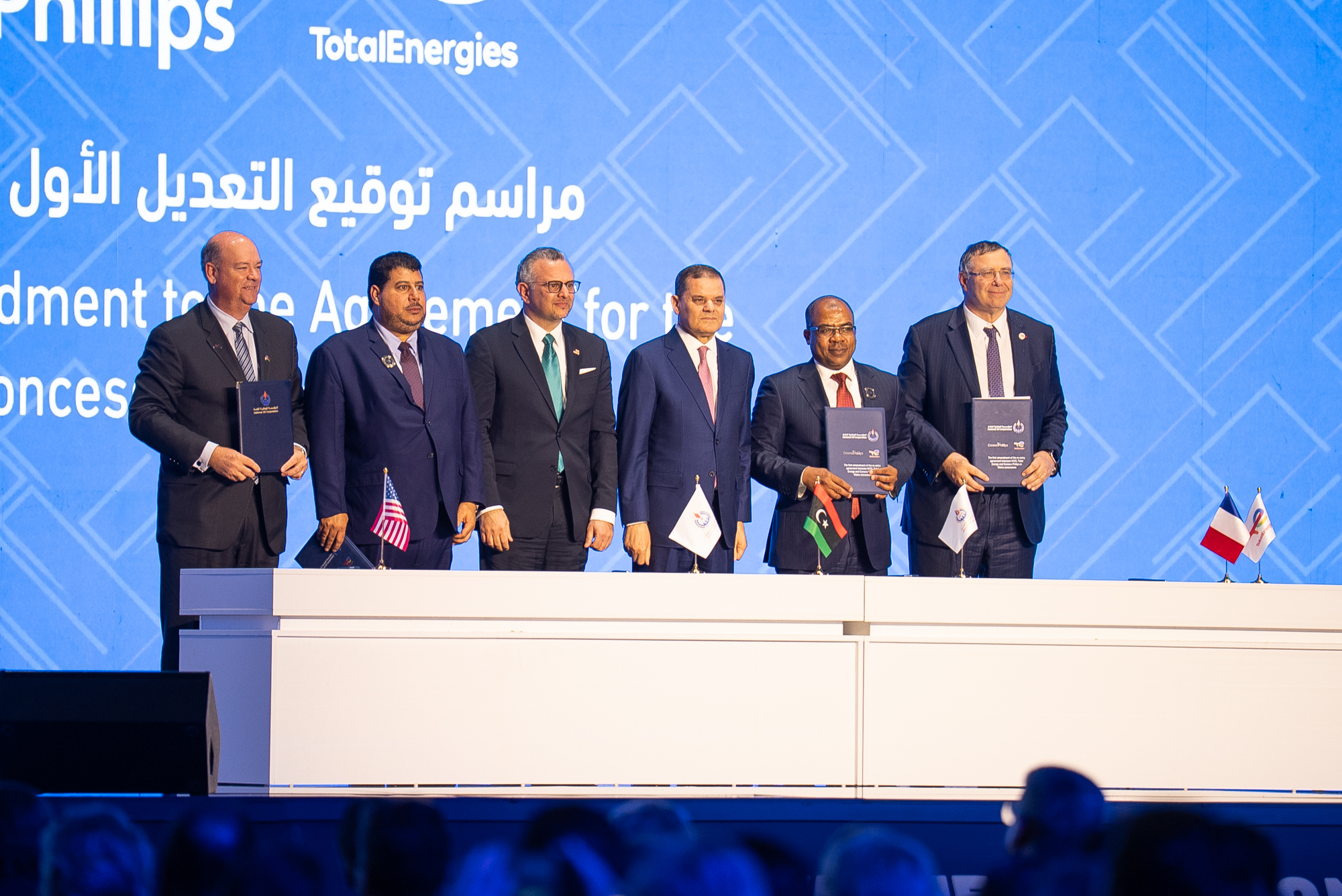
The Headline: Waha Oil Signs Deal with TotalEnergies & ConocoPhillips
At the center of the announcements is a 25-year, $20 billion investment agreement tied to Waha Oil Company, involving TotalEnergies and ConocoPhillips.
The investment is intended to modernize upstream operations and lift production capacity across the Waha concessions toward 850,000 bpd over the medium term. Plans include development of the North Gialo field, four new oil fields, and an exploration programme spanning 19 concession areas.
Collectively, the increase—reported as roughly 400-500,000 bpd—is projected to raise state revenues by more than $350 billion over the life of the agreement.
For international operators and financiers, the signal goes beyond the headline figure—it is the structure and duration. Running to 2050, the extended concession certainty and refreshed terms support the investment strategies, infrastructure buildout, and capital planning that boards and lenders require before committing at scale.
The Second Signal: Chevron Formalizes Interest
Following the ConocoPhillips and TotalEnergies agreements, Chevron signed a Memorandum of Understanding with National Oil Corporation (NOC) to evaluate potential oil and gas exploration and development opportunities.
Having exited Libya in 2010, the Chevron signing follows in the footsteps of ExxonMobil’s MoU signing with the NOC in August 2025 to explore several offshore blocks.
The re-engagement of the United States’ top two oil and gas producers is a powerful indicator of confidence in the country’s potential to weather geopolitical challenges and produce oil efficiently in the future. With energy security becoming an increasing priority, Libya is being seen again as an area of strategic importance within the energy arena.
Why This Matters for the Libyan Market
From a market perspective, the agreements do three things:
- Build credibility for capacity growth in Libya. Libya is positioning upstream expansion as a national economic priority with direct implications for fiscal inflows, service-sector growth, and jobs.
- Reshape the investability narrative. When supermajors and top-tier independents sign long-duration frameworks, it reshapes how global markets price probability: probability of execution, continuity, and follow-through.
- Increase demand across the supply chain. Large upstream ambitions translate immediately into demand for drilling services, brownfield optimization, integrity work, logistics, HSSE systems, and local stakeholder coordination.
The Investment Lens: Reading Between the Lines
For international companies assessing entry/re-entry, the announcements reinforce a few on-the-ground realities:
- Brownfield upside is central. The emphasis on production growth indicates Libya’s fastest wins will come from upgrading what already exists, not only from exploration.
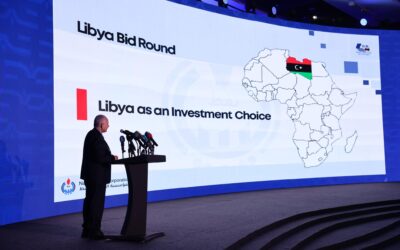
- Competitive licensing is back on the table. Libya’s bid round results are scheduled to be announced on 11 February 2026, and participation spans a wide mix of global firms (read Latest on the Libya Bid Round article here)— a clear sign that the opportunities will extend beyond a single flagship agreement.
- Gas export is part of the medium-term story. Ambitions to increase gas production and boost exports to Europe by early 2030s will influence infrastructure priorities, partner selection, and cross-border commercial planning as part of broader energy strategy.
The Stability Lens: A Realistic Assessment
From a security and operational continuity standpoint, these signings are best interpreted as positive momentum with persistent constraints.
- Positive indicators: The scale and tenor of agreements suggest stronger institutional focus and influence on continuity and long-term planning.
- Baseline Reality: Libya remains a complex operating environment where political and localized security dynamics can create delays and disruptions. These are not abstract risks but operational variables that must be accounted for.
- What this means for operators: The most resilient strategies combine (1) stakeholder mapping and engagement, (2) compliance discipline from day one, (3) logistics and mobility planning with contingencies, and (4) readiness frameworks that treat security and continuity as core project architecture especially as activity expands into the field.
At EC, we see these developments as more than headlines—they signal an upstream cycle that rewards disciplined operators: those who plan strategically, engage stakeholders thoughtfully, and build the operational backbone to execute safely in Libya. For companies looking to navigate this landscape with confidence, EC’s operational support services turn strategy into safe, reliable execution.